

You just finished a strong demo with a Japanese enterprise buyer. You record a 60-second voice note to follow up, then delete it. Then record again. Then delete again. By the fourth take, you've spent 15 minutes on a message that still sounds scattered. Now imagine doing that in 11 languages.
If you need to translate a sales voice note follow up, you already know the friction: raw voice memos carry fillers, awkward pauses, and disjointed grammar that undermine your authority, and get worse in translation. You're not alone. Sales reps think faster than they type and rely on voice notes for high-stakes communication, but the re-record loop is eating your day. Comfort Joe's YouTube breakdown of AI voice note follow-ups shows sales teams are already automating this workflow because the demand for faster multilingual follow-ups is real.
This guide walks you through a 3-stage workflow. Clean, Translate, Verify, that turns one rough note into a polished multilingual follow-up in under 2 minutes. You'll learn why cleaning before translating is non-negotiable, how to preserve your tone across languages, and the one step most reps skip that quietly kills their credibility. Stick around: the cleaning step contains a counterintuitive insight that changes how you record every future voice note.
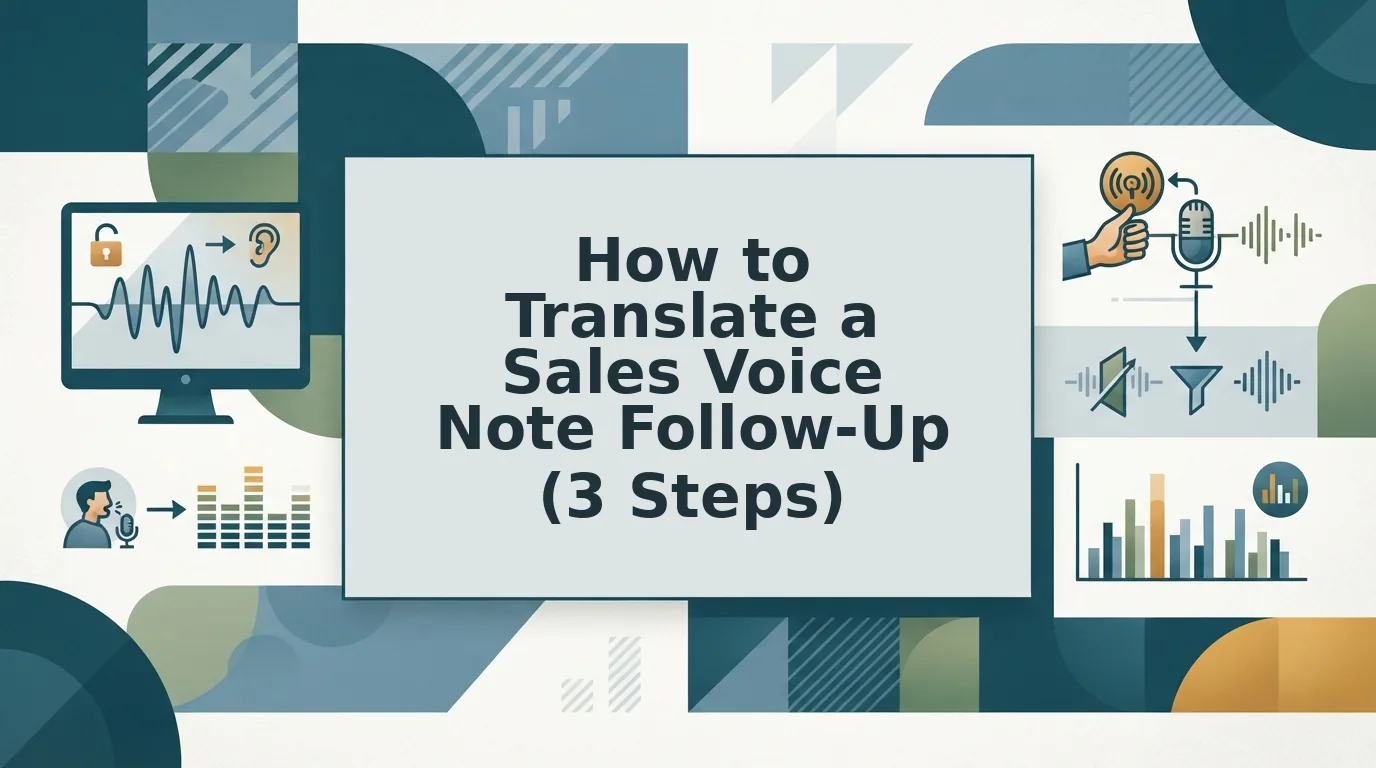
How to Translate a Sales Voice Note Follow-Up: The 3-Stage Workflow
Translating a sales voice note follow-up works best as a three-stage sequence: clean the audio first, translate the cleaned version, then verify tone and intent before sending. This Clean to Translate to Verify framework prevents filler words and grammar errors from compounding in the target language.
Prerequisites: A recorded voice note (or the ability to record one), a tool that removes filler words from audio, and a voice note translator that preserves your natural tone and cadence. VClar handles both cleaning and translation in one workflow.
Here's a worked example: a rep following up with a Japanese enterprise buyer after a product demo. The raw note contains fillers like "um" and "you know," plus a false start. Here's how the three stages transform it:
| Stage | Note Content |
|---|---|
| Raw note | "Um, hey Tanaka-san, you know, I just wanted to, uh, follow up on the demo and basically see if your team had any questions about the, um, the pricing structure we discussed." |
| Cleaned note | "Hey Tanaka-san, I wanted to follow up on the demo and see if your team had any questions about the pricing structure we discussed." |
| Translated note | "田中さん、デモについてフォローアップし、ご説明した料金体系についてご質問がないか確認したいと思います。" (Preserves the polite, direct tone of the original.) |
- Clean the raw audio. Upload your voice note to a tool that removes filler words from audio, such as VClar's filler word remover. The engine detects and strips "um," "ah," "like," "basically," "you know," and false starts from the audio timeline. You should hear a seamless, decisive message with no audible gaps or artifacts. This takes under 30 seconds for a 60-second note.
- Translate the cleaned note. Select your target language. VClar supports 11 languages including Japanese, Hindi, French, German, and Korean. The translator works from the cleaned audio, so grammar errors and fillers don't get carried into the translation. You should receive both translated audio and a transcript that preserves your original tone, accent, and cadence. Expect this stage to take 30-60 seconds.
- Verify tone and intent. Listen to the translated audio or read the transcript side by side with your cleaned original. Check that the buyer's name, key terms like pricing or timeline, and the call-to-action survived translation intact. If anything sounds off, re-clean the source note rather than editing the translation, fixing the source produces a cleaner target. One 60-second note becomes a polished multilingual follow-up in under 2 minutes, avoiding 15 minutes of re-recording.
If you're wondering how long the full workflow takes: a 60-second voice note with moderate fillers can be cleaned, translated, and verified in under two minutes using VClar. The cleaning stage removes verbal hesitations that would otherwise become awkward literal translations in the buyer's language, and the verification stage catches any tone shifts before the message reaches your prospect.
Why You Should Clean a Voice Note Before Translating It
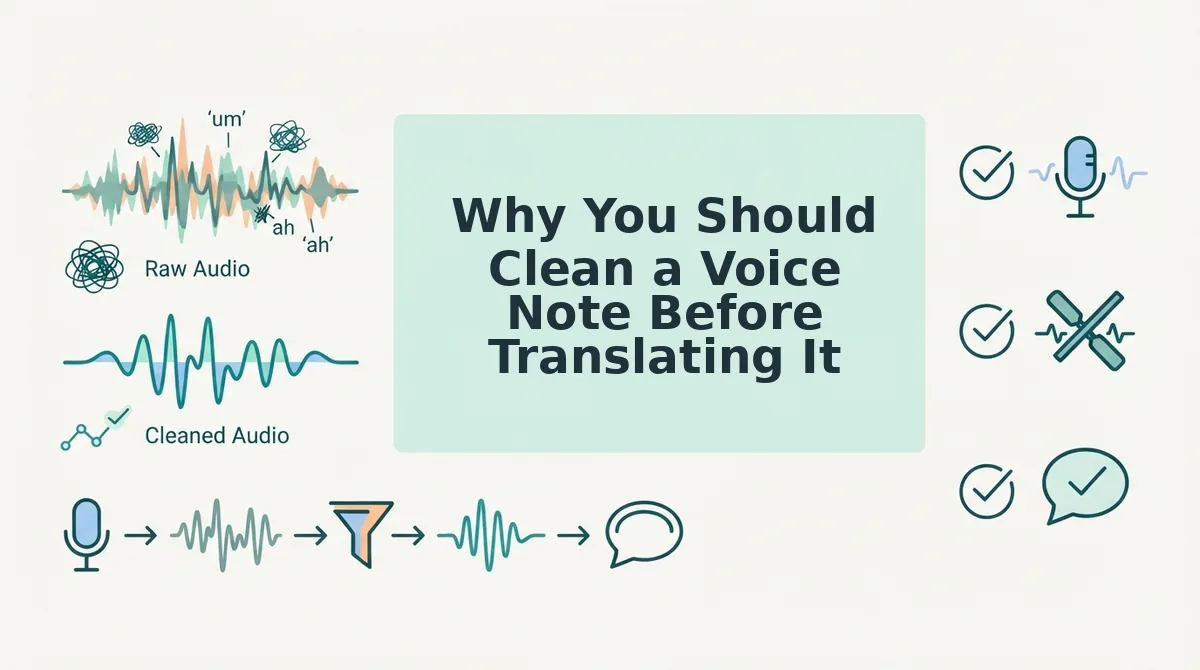
Cleaning a voice note is the process of removing filler words, false starts, and grammar errors from raw audio before it enters a translation workflow. Skipping this step means every verbal imperfection gets carried into the target language, often amplified.
Think of translation like photocopying a document. If the original has smudges and creases, every copy reproduces those flaws, and some become unreadable. Fillers like "um" and "you know" don't translate cleanly: in Japanese or German, they can render as awkward pauses or literal filler equivalents that make the rep sound hesitant or unprofessional. Grammar errors compound the same way, a run-on sentence in English becomes a confusing tangle in Korean or French.
Background noise and breath sounds add another layer of distortion. A translator working with noisy audio may mishear key terms, turning "pricing structure" into something entirely different. When you remove filler words from audio first, you give the translation engine a clean signal. When you fix grammar in voice messages before translating, you eliminate the errors that would otherwise multiply across languages.
The result: fewer translation errors, a sharper message, and a rep who sounds authoritative in every language. Cleaning first isn't an extra step, it's the step that makes translation worth doing at all.
Once your note is clean and translated, the next challenge is making sure it still sounds like you. Here's how to preserve your tone when translating a sales voice note.
How to Preserve Your Tone When Translating a Sales Voice Note
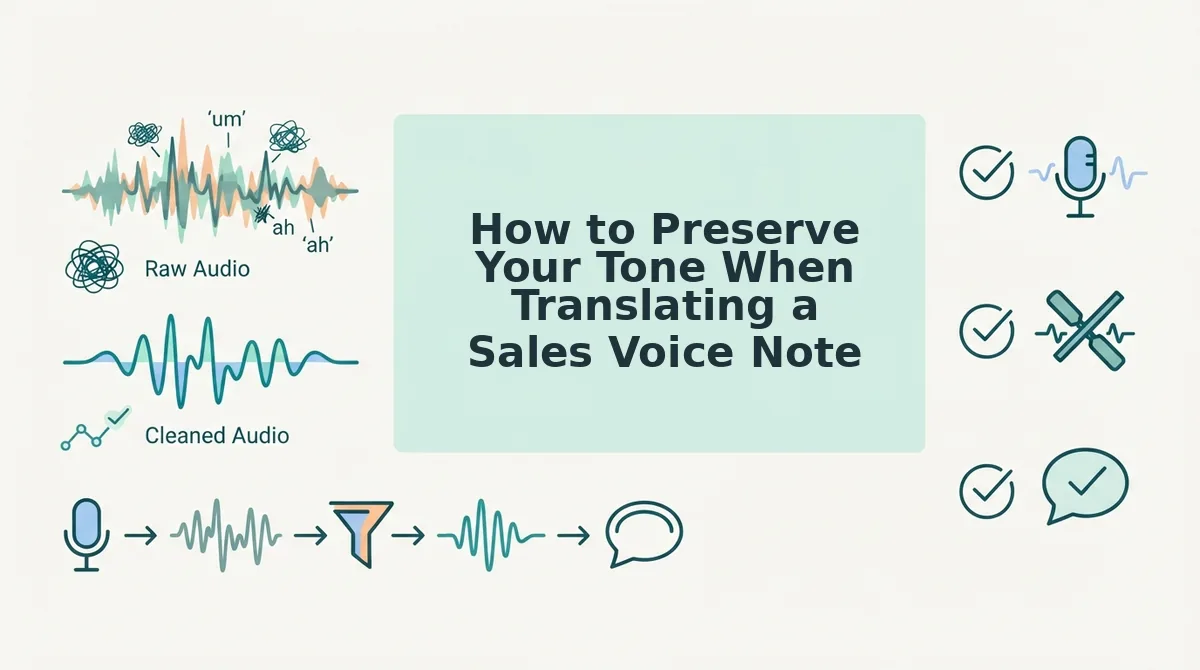
Tone preservation is the process of keeping your natural vocal identity, pacing, accent, emphasis, and emotional inflection, intact when a voice note is cleaned and translated into another language. It matters because buyers buy from people they trust, and trust is built on authentic human delivery, not polished robotic output.
Think of tone preservation like a professional tailor altering a suit: the fabric, cut, and fit are adjusted for a new occasion, but it still looks and feels like your suit, not a rented costume. A synthetic text-to-speech clone is the rental, it fits the measurements but loses the wearer's personality.
Simple: Record With Intention
Start by speaking at your natural pace and volume. Don't slow down artificially for a translator, modern AI voice translation handles conversational speed. The goal is a clean source recording, because every translation layer amplifies whatever is already in the audio.
Intermediate: Verify With a 5-Point Checklist
After translation, run the output through this verification checklist before sending:
- Tone. Does the message still sound like you, or like a customer service bot?
- Pacing. Are pauses and sentence rhythm natural, not rushed or stretched?
- Filler removal. Are ums and false starts gone without creating awkward silence gaps?
- Grammar. Is the translated grammar correct without sounding overly formal for your relationship?
- Accent preservation. Is your regional accent or pronunciation pattern still recognizable?
This 5-point checklist is unique to this article and gives you a repeatable quality gate before any international follow-up goes out.
Advanced: Match Format to Buyer Relationship
VClar preserves the speaker's natural tone, accent, and rhythm while translating across 11 languages, unlike synthetic text-to-speech clones that rebuild the voice from scratch. Use the translated voice note when the buyer already knows your voice, early-stage rapport depends on continuity. If the relationship is new or the deal is technical, pair the voice note with a translated text summary so precision and personality work together.
A rep's authentic voice builds trust with international buyers; robotic translation kills the deal. If you're unsure whether your current workflow is preserving tone, run one of your recent follow-ups through the 11-language translation workflow and check it against the 5-point list above.
Which Languages to Prioritize for Enterprise Buyers
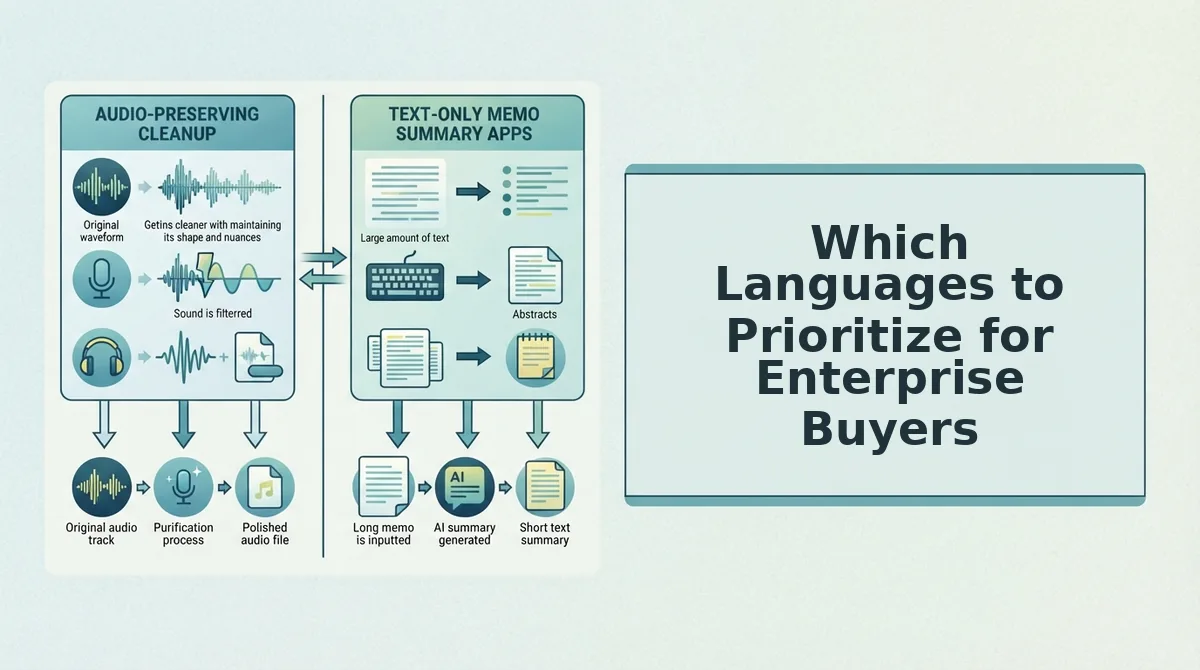
Prioritize languages where deal size is high and the buyer's English proficiency is low. That combination creates the largest communication gap, and the biggest payoff from translated voice notes. Use this 2x2 decision matrix: plot each prospect on deal size (vertical axis) against English proficiency (horizontal axis), then start with the top-left quadrant.
- Hindi. India's enterprise market is expanding rapidly, and many senior buyers prefer Hindi for relationship-building conversations even when they read English contracts. Use Hindi voice notes for early-stage rapport with procurement leads and founders.
- Mandarin Chinese. Chinese enterprise buyers often conduct negotiations in Mandarin and expect vendors to meet them in their language. A translated voice note in Mandarin signals commitment before a single contract term is discussed.
- Japanese. Japanese business culture places heavy weight on formality and tone, and English proficiency among senior decision-makers varies widely. Translated voice notes let you match that formality without losing your natural delivery.
- German. German-speaking enterprise buyers in the DACH region value precision and directness. A translated voice note that preserves your tone while cleaning filler words aligns with their communication expectations.
- Portuguese. Brazil's enterprise sector is a fast-growing market where English proficiency among mid-level buyers is often limited. Portuguese voice notes open doors that English-only follow-ups cannot.
- Korean. Korean enterprise buyers frequently prefer Korean for relationship-building, especially in manufacturing and technology sectors. Translated voice notes bridge the gap before formal documentation switches to English.
- French. French-speaking buyers in Europe and Africa often expect vendors to make an effort in French, even when English is an option. A French voice note demonstrates respect for the buyer's working language.
VClar supports 11 languages. Hindi, English, French, Japanese, Korean, German, Russian, Portuguese, Spanish, Italian, and Chinese, with 110 translation directions available. Start with the language of your highest-value, lowest-English-proficiency prospect and expand from there.
Voice Note vs. Translated Text Summary: When to Use Each
Voice notes build rapport; text summaries convey precision. The right format depends on deal stage and buyer relationship, not on which one is objectively better.
| Factor | Translated Voice Note | Translated Text Summary |
|---|---|---|
| Best for | Early-stage reps building rapport with international buyers | Late-stage reps confirming specs, pricing, and action items |
| Primary strength | Preserves tone, warmth, and personal connection across languages | Eliminates ambiguity and creates a searchable written record |
| Ideal deal stage | Discovery, qualification, and relationship-building calls | Proposal review, negotiation, and post-meeting recaps |
| Buyer signal | Buyer responds better to voice or informal channels | Buyer requests written confirmation or detailed documentation |
| Risk | Nuance can be lost if the translation is not tone-preserving | Emotional connection is absent, which can stall rapport |
Text summaries are not a weakness, they are the right tool when precision matters more than personality. A rep who uses both formats strategically, matching the buyer's communication style at each stage, outperforms one who defaults to a single format. For answers to the most common questions about translating sales voice notes, see the FAQ below.
FAQ: Translating Sales Voice Notes
Translating a sales voice note means converting a spoken follow-up into another language while keeping your tone, pace, and intent intact. The most common questions from sellers and founders cover WhatsApp workflows, voice authenticity, and whether to send audio or text.
How do I translate a WhatsApp voice note for a buyer?
Record or upload the voice note into VClar, which cleans filler words and background noise, then translates the audio into your buyer's language. The output is a polished voice note in the target language that preserves your original tone and cadence, ready to send back through WhatsApp.
Will translating my voice note make me sound robotic?
No, if you use a voice-preserving translator. VClar translates the spoken content without replacing your voice with synthetic text-to-speech, so your natural accent, pacing, and delivery remain intact. Robotic output happens only when tools convert speech to text, translate the text, then re-synthesize audio with a cloned or generic voice.
Is it better to send a translated voice note or a text summary?
It depends on deal stage and relationship. Early-stage outreach and rapport-building favor voice notes because tone builds trust. Late-stage negotiations, pricing confirmations, and action items favor text summaries because they are easier to reference and forward. Many sellers send both: the voice note for connection, the text for the record.
Why does my translated voice note still have awkward phrasing?
Because the source audio contained filler words, false starts, or ungrammatical speech that got translated literally. Cleaning the voice note first removes those artifacts, so the translation engine works from clear, grammatical input. VClar's workflow cleans before translating, which is why the output reads and sounds natural. For written follow-ups, a spoken English grammar cleaner applies the same principle to transcripts.
How long does it take to translate a sales voice note?
Under two minutes for a 60-second note using VClar's clean-translate-verify workflow. The cleaning pass removes fillers and noise, translation runs in seconds, and the verify step lets you confirm the output before sending. No re-recording is required.
The Follow-Up That Closes Without Re-Recording
The entire workflow reduces to three stages: Clean to Translate to Verify. A 60-second voice note becomes a polished, multilingual follow-up in under two minutes, with no re-recording loops and no loss of your authentic delivery. The bottleneck was never your speaking; it was the friction between the raw note and the buyer-ready message.
That friction is now gone. The same workflow that works for sales follow-ups applies to investor updates, team briefings, and partner outreach. If you send voice notes as a founder, the voice notes for founders use case shows how to apply clean-translate-verify across every stakeholder conversation.
Your next step: take the last follow-up you hesitated to send, run it through VClar's clean-translate-verify flow, and send it in the buyer's language. One take is enough.