
You've just recorded a 90-second voice note for your lead investor, hit send, and then replayed it, only to find three half-finished thoughts buried between the good ones. Founders think at roughly 150 words per minute but speak at about 120, and that gap is exactly where sentence fragments are born. You're not sloppy; your brain is simply outpacing your mouth.
Here's the good news: you don't need a writing coach or a third re-record to fix sentence fragments in a founder voice note. This guide walks you through why fragments happen when you speak, how to spot them in your own voice notes for founders, and a 3-pass audit method that turns rough audio into decisive updates in one take.
By the end, you'll have a repeatable framework, and you'll also see why the most common "fix" most people recommend actually makes the problem worse. VClar's fragment removal and grammar correction can handle the heavy lifting, but knowing the method gives you control over every message you send.
Why Founders Speak in Sentence Fragments
A sentence fragment is a group of words that lacks a complete subject-verb pair or fails to express a full thought on its own. Founders produce them constantly in spoken communication, not from carelessness, but from a cognitive speed mismatch.
Think of your brain as a sports car and your mouth as the on-ramp. The car is already at highway speed while the merge lane is still feeding traffic in at a slower pace. Your mind has moved to the next idea before your voice finishes the current one, so the sentence gets cut off mid-thought.
This gap, thinking at roughly 150 words per minute while speaking at about 120, creates three fragment patterns in founder voice notes:
- Orphan clauses: "Because we hit the milestone." The listener waits for the main clause that never arrives.
- Missing subjects: "Need to follow up with the legal team." Who needs to? The founder, but the sentence doesn't say it.
- False stops: "The demo went well. Which surprised the client." The second "sentence" is a fragment riding on the first.
In casual conversation, fragments signal authenticity and momentum. In an investor update or a client pitch delivered as a voice note, they create ambiguity about who did what and what happens next. The listener can't ask for clarification in real time, so the fragment becomes a permanent gap in the record.
Most grammar tools flag fragments without explaining why they appear in spoken audio specifically. The founder-specific cause is the thinking-speaking speed gap, and fixing it requires an audit method built for voice, not for typed text.
The Fragment Audit: A 3-Pass Method for Voice Notes
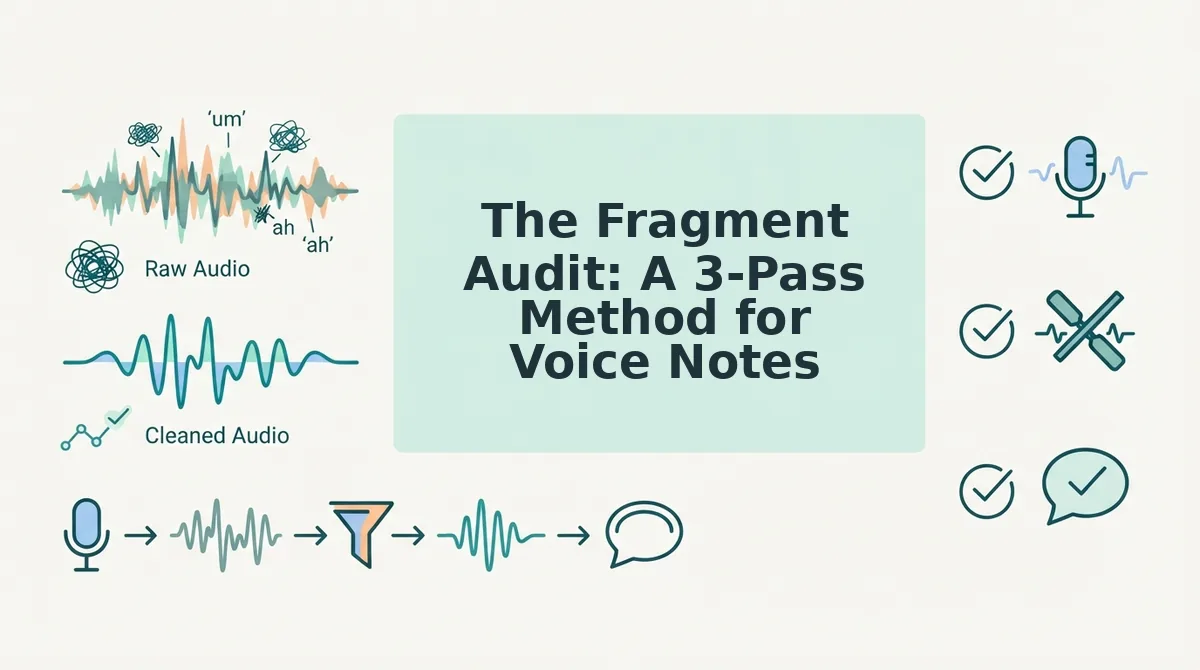
The Fragment Audit is a three-pass listening method that identifies and repairs incomplete sentences in a voice note before you send it. Each pass targets one fragment pattern, so you never have to re-record the entire message.
What you need: your voice note recording, a way to replay it at normal speed, and either a transcript or a notepad. No special software is required, though VClar's filler word removal and grammar correction can automate parts of this process after you learn the method.
- Pass 1. Listen for orphan clauses (2-3 minutes). Play the recording and mark every sentence that starts with a subordinating word, "because," "which," "although," "if," "when", but never delivers a main clause. Example: "Because we hit the milestone." Fix it by attaching the orphan to the previous sentence or completing the thought: "We hit the milestone." You should end this pass with a list of every dangling clause in the note.
- Pass 2. Identify missing subjects or verbs (2-3 minutes). Replay the audio and check each sentence for a clear actor and action. Example: "Need to follow up." Who needs to? Add the subject: "I need to follow up." Example: "The pricing page." What about it? Add the verb: "The pricing page is live." Success looks like every sentence having a named subject and a concrete verb.
- Pass 3. Merge or split (2-3 minutes). Listen a third time for false stops, fragments that should attach to the sentence before or after them. Example: "The demo went well. Which surprised the client." Merge them: "The demo went well, which surprised the client." If a fragment stands alone and can't merge cleanly, split it into its own complete sentence. You should finish with zero orphan clauses and zero missing subjects.
The entire audit takes under 10 minutes for a typical 90-second voice note. Once you've identified the fragments, you can either re-record the corrected lines individually or run the audio through VClar's grammar correction engine, which repairs fragments while preserving your natural tone, accent, and cadence.
Now that you can spot fragments reliably, the next step is fixing them without losing the momentum of your original take.
How to Fix Fragments Without Re-Recording
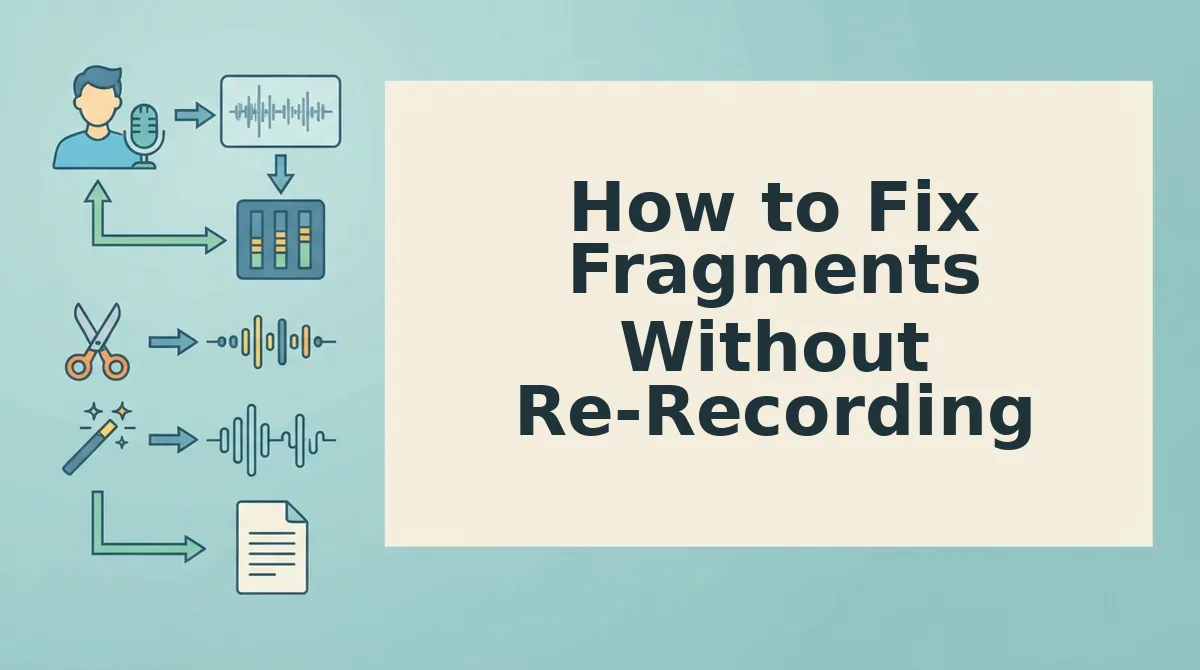
You have three practical paths: transcribe and edit manually, re-record until it sounds right, or run the audio through an AI voice-note cleaner that fixes grammar while preserving your natural delivery.
| Method | How It Works | Trade-Off | Best For |
|---|---|---|---|
| Manual transcription + text edit | Transcribe the voice note, fix fragments in text, then read the corrected script aloud. | Accurate but slow; the final take often sounds scripted because you're reading, not speaking. | Founders preparing formal written updates where audio delivery matters less. |
| Re-record until clean | Repeat the take until fragments disappear naturally. | Zero cost but high time cost; repeated takes can flatten your energy and make you sound rehearsed. | Founders with short, high-stakes messages like investor intros. |
| AI voice-note cleaner | Upload raw audio; the tool removes fillers, fixes grammar, and tightens phrasing while keeping your vocal timbre and accent intact. | Requires trusting an AI workflow; output quality depends on the tool's audio-first design. | Founders who send frequent voice notes and need one-take confidence without re-recording loops. |
Text-first grammar tools like Grammarly or QuillBot handle written fragments well, but they operate on transcripts, not audio timelines. That means you still have to re-record the corrected version yourself. VClar's approach is audio-first: it fixes grammar in voice messages directly on the audio, so the corrected take keeps your pacing, accent, and natural inflection.
The manual re-recording loop is the real hidden cost. Every retake adds minutes and chips away at spontaneity. If you send three voice notes a day and each takes two retakes, that's roughly 30 minutes weekly spent chasing fragments instead of communicating.
Before and After: Fragment Fixes for Common Founder Scenarios
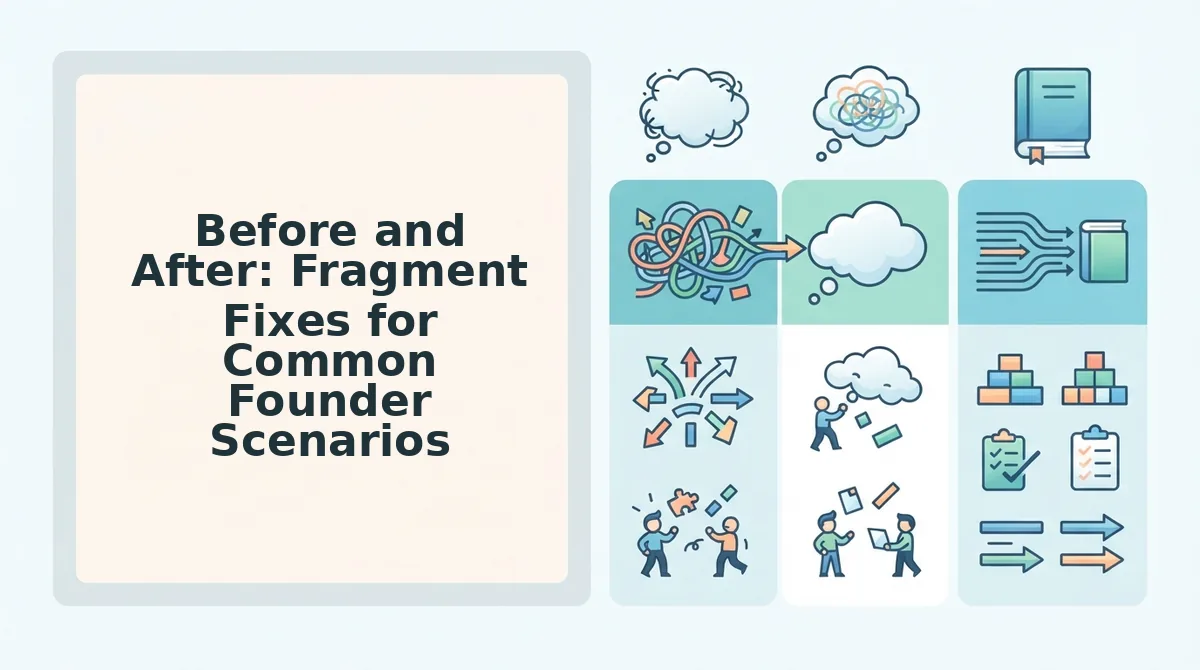
Here are three real fragment patterns founders hit in daily voice notes, with the corrected version an audio-first cleaner produces.
- Investor update: "Hit the milestone. Because the team shipped early." The second sentence is a dependent-clause fragment. The fix attaches it to the main clause: "We hit the milestone because the team shipped early." This matters because investors read fragmented updates as scattered thinking, and a single clean sentence restores authority.
- Team standup: "Need to follow up on the bug." This lacks a subject, which is fine in Slack but weak in a voice note meant to assign ownership. The fix adds the missing subject: "I need to follow up on the bug." It matters because standup voice notes often become the team's task list, and ambiguous subjects create ownership gaps.
- Client follow-up: "The demo went well. Which surprised them." The relative clause is stranded as its own sentence. The fix merges it: "The demo went well, which surprised them." This matters because client-facing voice notes shape perceived competence, and fragment errors can read as carelessness even when the content is strong.
FAQ
How do I fix sentence fragments in a founder voice note?
Run the audio through an AI voice-note cleaner that detects incomplete sentences and merges or completes them on the audio timeline. Alternatively, transcribe the note, edit the fragments in text, and re-record the corrected version. The audio-first approach preserves your natural delivery; the manual approach gives you full control but costs more time.
Can AI fix fragments without making me sound robotic?
Yes, when the tool is designed for audio rather than text-to-speech. VClar edits the existing audio timeline by removing fillers and correcting grammar while preserving your vocal timbre, accent, and cadence. Robotic output happens when tools convert speech to text, fix it, then synthesize a new voice. Audio-first cleaners avoid that conversion step entirely.
What's the difference between a fragment and a stylistic pause?
A stylistic pause is a deliberate break for emphasis, often followed by a complete sentence that stands on its own. A fragment is an incomplete sentence missing a subject, verb, or complete thought, like "Because the team shipped early." Stylistic pauses work in spoken delivery; fragments read as errors when transcribed or heard by listeners expecting polished communication.
How do I stop speaking in fragments during recording?
Practice the three-pass method: record once, listen for incomplete sentences, and mentally complete each fragment before the next take. You can also use an AI cleaner that removes filler words from audio and fixes fragments automatically, which reduces the pressure to speak perfectly in one take. Over time, hearing the corrected versions trains your ear to avoid fragments naturally.
Make the Fragment Audit Your Default Voice Note Habit
The fragment audit isn't a one-time cleanup exercise. It's a repeatable method that saves re-recording time on every message you send. Once you internalize the three passes, you stop hearing "fix this later" and start hearing "send it now."
That shift matters more than any single grammar rule. Founders who audit their fragments once and then rely on memory still drift back into um-heavy, half-sentence voice notes within a week. The founders who stay sharp are the ones who make the audit a 60-second pre-send ritual.
Here's the pattern interrupt worth sitting with:
- Pass one: Find the fragment.
- Pass two: Name the missing piece.
- Pass three: Re-record the sentence, not the whole note.
If you're sending voice notes across borders, the same audit applies before translation. A fragment that confuses an English-speaking investor will confuse a Japanese one twice as fast. Run the audit, then use a voice note translator that preserves your tone while cleaning the grammar in all 11 supported languages.
VClar handles the filler removal and grammar fixes without flattening your cadence or accent, so you record once and send with confidence. The fragment audit becomes your safety net, not your bottleneck.
A voice note with complete sentences sounds like a founder who already knows the answer.