

Guides
AI Speech Enhancement: The Tech Behind VClar
VClar turns a voice message into words, then uses the rest of those words to drop fillers and repair spoken grammar without adding facts. The cleaned sentence can be spoken back in a delivery that stays recognizable as you. It is not a noise filter, and it is not a clone of someone else.
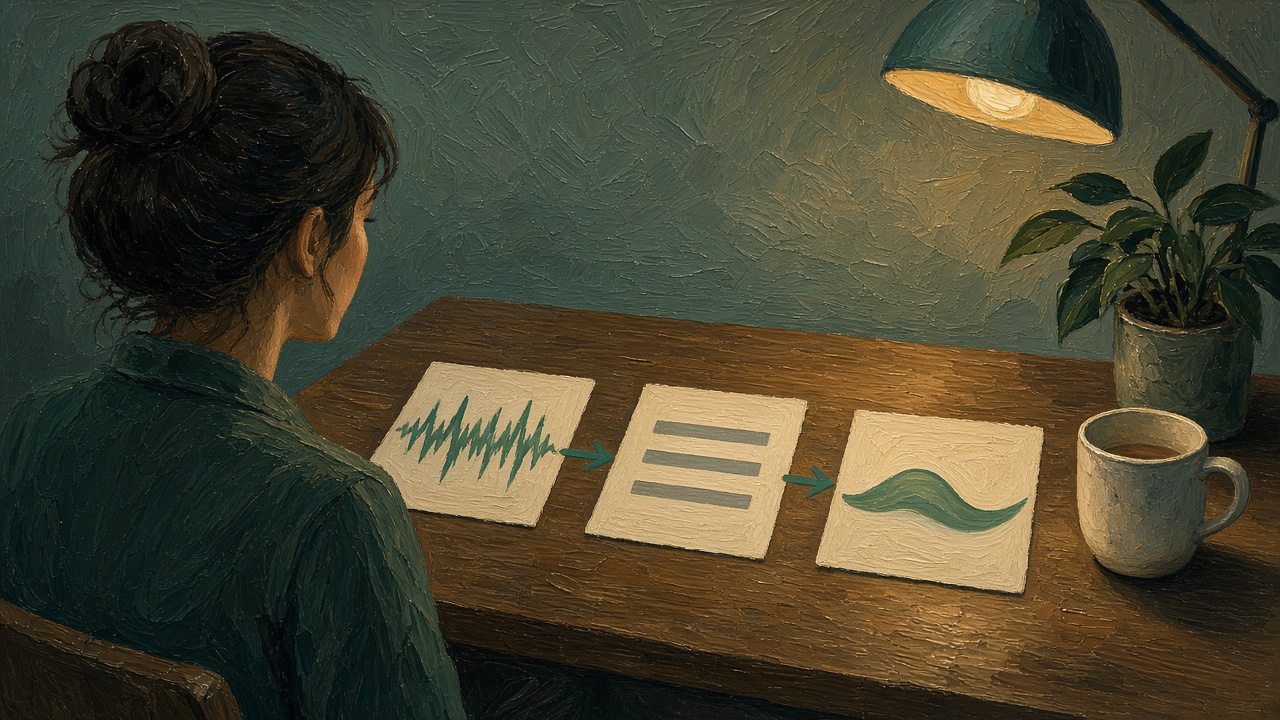
People hear “AI cleans your voice” and picture a noise knob. Turn the knob and the fan goes away, the voice gets brighter, and every word you said is still every word you said. That knob exists. It is a useful knob. It is not what makes a voice message safe to forward. The dangerous part of a voice message is a word: an “um” that a transcript promotes into a real word, a “Tuesday, no, Thursday” that a later sentence forgets to repair, a tense that says the opposite of the decision. Cleaning that is a language problem. The sound of the room is a different problem.
This page is the language problem, in plain words, for someone who wants the mechanism before they trust a file. The workflow guide is the order of buttons. The filler guide and the grammar guide are the two edits. The live demo shows a sample going through the product. Here the question is why a wording pass can remove an “um” when a noise reducer cannot, and what VClar does and does not claim about the models behind that pass.
What actually runs
The path has two jobs, and they are not the same model doing magic on a waveform.
- Speech becomes text. A speech-to-text system writes down the voice message, including the mess: fillers, false starts, the repaired day. That text is the original side of the diff. The privacy policy names Deepgram among the upstream providers that handle audio. The product is built so the provider can be one of those speech services. VClar has not published a promise that every file in every region uses one named engine, and it has not published that engine’s word-error rate on your accent.
- Text becomes a cleaner spoken sentence. A language model receives the transcript and proposes a version a person could say out loud. It is instructed to keep the original meaning, the language, the tone, and the general speaking style, and to drop fillers, false starts, repeated words, and broken grammar. It is instructed not to add facts, names, numbers, opinions, or promises that the transcript does not support. The privacy policy names OpenAI among the upstream providers. Again, that is the class of system, not a published model card with a score.
You then see the original wording, the cleaned wording, and what changed. If you chose another supported language, a translation of the cleaned meaning can follow. The cleaned sentence is what can be turned back into audio. The languages hub lists the public set: Hindi, English, French, Japanese, Korean, German, Russian, Portuguese, Spanish, Italian, and Chinese, 110 directions. The wording pass is supposed to correct in the language of the transcript rather than forcing everything into English. Translation into a second language is a separate choice.
That is the whole mechanism a user can verify. Transcript. Proposed sentence. A list of changes. Your accept or reject. Anything smoother than that, a layer count, a training-set size, a percentage, is not something VClar has published, and this page will not invent it.
Context-aware language models
“Context-aware” is a research phrase before it is a product phrase. It means the system uses words around the word it is deciding about, not a single sound in isolation. IBM Research’s ConvKT paper, presented at Interspeech 2023, is one concrete example from spoken dialog. The authors start from a known gap: text dialog systems can look at a long stretch of the conversation, while a fully end-to-end spoken system struggles because raw speech is too long to treat the same way. Their model uses conversation-level context, transferred from a language model, and they report gains of up to 8 percent over strong non-contextual baselines on a dialog-act classification task. Read that number as their result on their datasets. It is not a VClar score. It is evidence that “look at the surrounding speech” beats “look at this instant alone” on a task researchers can measure.
VClar’s wording pass is the small, practical version of that idea, limited to the note you uploaded. The context is the transcript of that note. “Um, the invoice is due Tuesday, no, Thursday” contains a repair. A system that sees only “Tuesday” can keep Tuesday. A system that sees the “no” after it can keep Thursday, if it is doing its job. The instruction on VClar’s side is explicit about this kind of judgment: vague words may be replaced with clearer ones only when the intended meaning is obvious from context, and new facts are forbidden. Context here is not your email archive, not your other voice notes, and not a profile of how you usually speak. It is this recording.
That limit is a feature. A model with your whole history could “helpfully” insert a client name you mention often. The pass is told not to. When it slips, the diff is how you see the slip. Context-awareness without a human read is how fluent mistakes ship. The research result from IBM is about classification accuracy on dialog acts. The product result you should demand is narrower: the cleaned line still means what you meant, and you checked.
Why a text grammar checker is the wrong picture
A grammar checker built for essays sees prose that was already typed. It has no false start, no “um,” and no moment where the speaker changed their mind out loud. Purdue OWL’s guidance for conference talks makes the matching point from the writing side: a paper meant to be read silently is a poor script for the ear. It is long, and it lacks the simple sentence shape a listener needs. Spoken cleanup runs the other direction. The input is already speech. The output has to be speakable. Turning a voice note into a lawyer’s paragraph would be a successful essay edit and a failed voice edit.
So the wording pass is allowed to do things an essay checker and a transcript cleaner would refuse. It may rewrite a messy sentence, shorten clutter, and combine or split sentences so the spoken message is easier to follow. It may not become a formal document. The positioning written into the pass is that VClar improves spoken communication. The result should sound like the same person speaking more clearly. Medium-strength editing is the instruction: enough to remove the mess, not enough to invent a new opinion. You still judge whether it obeyed.
A generic chatbot given the same transcript with no such instruction will often do the opposite. It will add a polite framing, a bullet list, or a fact that makes the answer feel complete. Those additions are context in the worst sense: the model’s habit of being helpful, pasted onto your decision. The voice-message pass is narrower on purpose. Helpful, here, means a sentence you could have said, with the clutter gone.
Neural speech enhancer (filler removal)
Call the filler step an enhancer only if you keep the definition honest. The thing being enhanced is the message. The tool is a neural language model, which is a network trained to predict and revise text, not a hand-built gate that closes whenever the volume dips. An “um” has a pitch, a vowel, and a place in the sentence. Closing a gate on quiet audio would also close on the ends of words, on a soft “not,” and on a name said carefully. Removing “um” means deciding that this particular word is not part of the ask.
Listeners already make a version of that decision, which is why the residue matters. A National Library of Medicine paper on disfluency finds that as a speaker’s cognitive load rises, speech becomes more disfluent, and listeners treat filled pauses and repairs as a sign the speaker is working hard to plan. If you planned the point before you recorded, the leftover “um” is no longer evidence. It is leftover. Taking it out of the message keeps the listener’s attention on the decision. The paper does not say that every “um” harms memory in every setting. It says disfluency is information about planning. A status note does not need to broadcast the planning.
Automatic transcripts have their own trouble with the same sounds. A paper on filled pauses in lecture speech says recognition of well-prepared fluent speech is in better shape than recognition of spontaneous speech, and that filled pauses are easily confused with ordinary short words because they sound like them. That is the failure mode of a transcript that never gets a wording pass: “um” becomes “a,” or sticks to the next noun, and the sentence looks finished. Filler removal is the pass that treats those tokens as removable once the rest of the sentence is clear. It is not a guarantee that the first transcript heard them correctly. If the original line already mis-heard the name, the cleaned line can inherit the miss. Read both columns.

What a noise filter actually cleans
A noise filter cleans energy, not meaning. The Audacity manual’s page on noise reduction is the classroom version. You select a region that contains only the noise, the effect learns that profile, and it turns those frequencies down in the rest of the clip. The manual is frank that the result can distort speech, that it fails when the noise is loud or variable, and that it is the wrong tool for clicks and for a crowd. Nothing in that procedure knows that “Thursday” replaced “Tuesday.”
Descript’s Studio Sound is the modern version of the same job. Descript’s help describes it as an AI audio effect that enhances a spoken voice by reducing background noise, echo, and other distractions, so a rough take sounds closer to a studio recording. It is applied to the audio file. It has an intensity control because aggressive noise removal can suppress the speech itself. That is a real product for a real problem, the laptop mic and the room. It is not a transcript of what you meant. VClar’s published cleanup can also quiet distracting audio as part of a voice message, and the identity of the speaker is supposed to stay. The part this page is about, the part Studio Sound’s help page does not claim, is the wording: fillers, grammar, and a diff.
| Noise reduction | This wording pass | |
|---|---|---|
| Input it understands | A spectrum: hum, hiss, echo, a noise profile. | Words: the transcript of one voice message. |
| What leaves | Energy that matched the noise profile. | Fillers, false starts, repeated clutter, and broken spoken grammar, when they do not carry meaning. |
| What can go wrong | Speech is dulled or punched out along with the noise. | A fact is dropped, flipped, or smoothed into a confidence you did not have. The diff is how you see it. |
| What stays | Every word you said, including the repair. | The decision, in a delivery that should still sound like you. Accent included. |
Use both kinds of tool when you have both kinds of problem. A door slam is Audacity’s problem, or a studio effect’s problem. An “um” in front of a price is this page’s problem. Running noise reduction until the voice sounds expensive, and then skipping the diff, is how a polished wrong day gets sent. The neural part of VClar is not a louder claim about the same knob. It is a different knob.
Transcript generation
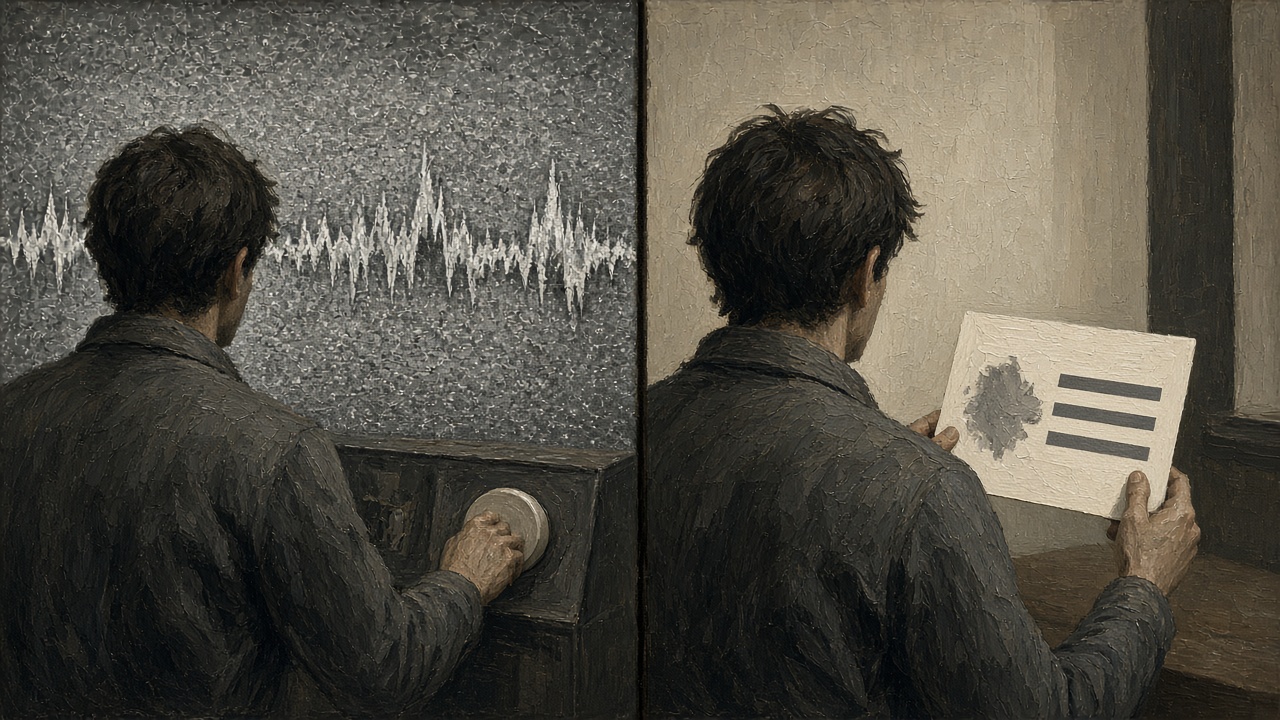
Everything above depends on the transcript being a fair record of what you said, mess included. If the speech-to-text step drops the “no,” the language model never sees the repair, and no amount of context inside the wording pass can restore a word that was never written down. That is why the original column exists. You are not only checking the model’s editing taste. You are checking whether the transcript heard you.
The wording pass returns more than a single polished paragraph. It returns the cleaned sentence and the changes: what the original stretch said, what it became, and a short reason. Filler removals and grammar repairs are both supposed to be visible, because they are different edits. A filler removal should not change the day. A grammar repair might change the shape of the sentence and must not change the ask. When those show up in one blended paragraph with no list, you still have the original transcript to compare. The workflow guide is where that comparison sits in the product: after Enhance, before export.
Translation, when you ask for it, starts from the cleaned meaning rather than from the raw transcript. That order is the point of generating a transcript you can edit in language before you change language. A translation of the raw line can freeze the false start. A translation of “The invoice is due Thursday” has one day. It can still be wrong about a name. The transcript does not retire you. It gives you a text object precise enough to reject. The translation guide is that order for any file: clean the meaning, then translate the cleaned meaning.
Here is the shape of that object. It is an illustration, not a screenshot and not a measured error rate.
| Layer | What it contains |
|---|---|
| Transcript | Um, so the invoice, uh, is due Tuesday, no, Thursday, if that’s okay. |
| Cleaned spoken line | The invoice is due Thursday. |
| What changed | Fillers removed. The repaired day resolved to Thursday. The softener “if that’s okay” removed. You accept that only if you meant to sound decided. |
| What must not appear | A new amount, a new client, or a Friday that nobody said. |
If the transcript had heard “Friday” instead of “Thursday,” the cleaned line would look confident and be wrong. You catch that by listening once with the original column in front of you. No published percentage removes that listen. VClar has not published an accuracy number, and a page about the technology should not borrow one from a lab that was not this product.
What the transcript is bad at, on purpose
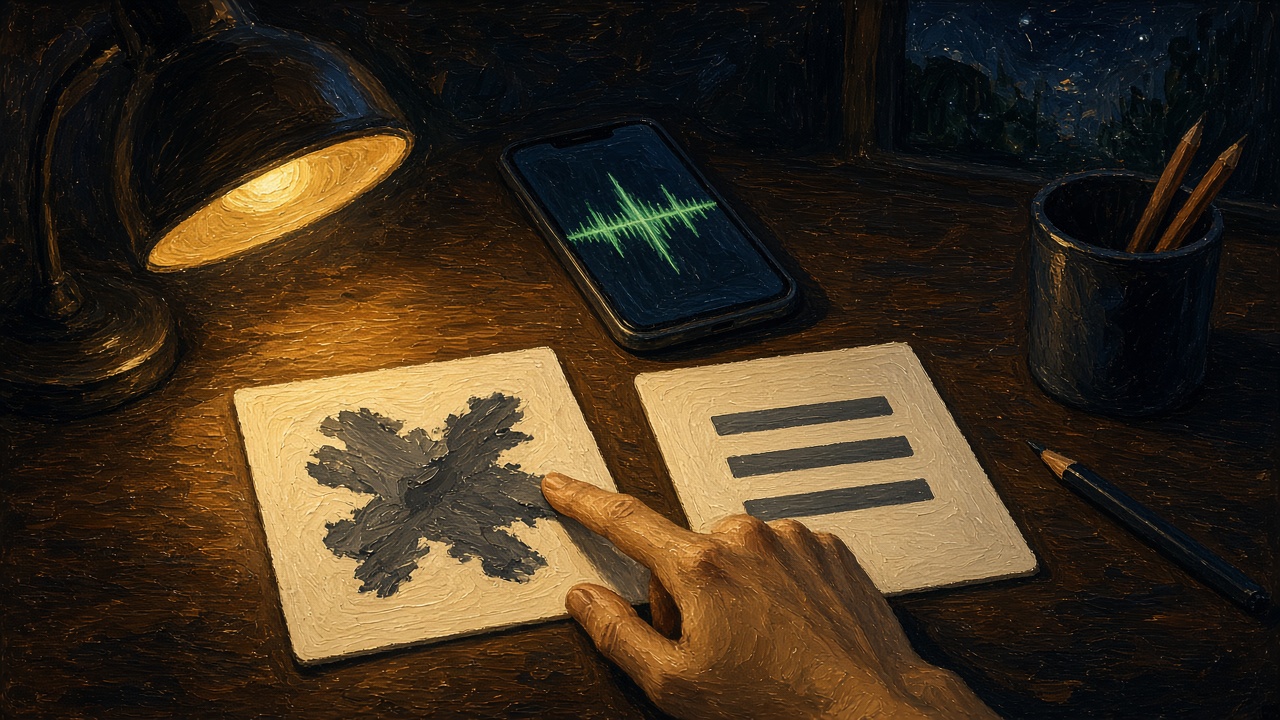
Spontaneous speech is full of tokens a careful essay never has. Partial words. Restarts. Two languages in one sentence. The wording pass is told to keep a mixed-language style when you mixed languages on purpose, and to correct each phrase in its own language rather than forcing the note into English. It is told to keep the original script, so Japanese stays in Japanese script rather than being romanized for the convenience of an English pipeline. Those rules are there because a “cleanup” that translates you into English and into Latin letters has changed the message even when every grammar box is ticked.
Names and codes are the other weak spot, and they are weak on purpose in a different way. The pass must not invent them, and it also must not “correct” a product name into a common word that seems more grammatical. When the transcript is fuzzy, the model may still guess, because guessing is what language models do with a gap. The guess shows up as a change. Your job in the diff is to treat every changed name as guilty until it matches what you said. That is not a failure of the explanation. It is the reason the explanation includes a review step.
What this is not
It is not voice cloning. Cloning builds a voice that can say things the person did not say, often in someone else’s mouth. VClar’s privacy policy says the opposite use is forbidden on your recordings: VClar does not use your voice to create content that misrepresents identity or is attributed to someone else, and it does not create voiceprints or use recordings to identify you. The audio that comes back is supposed to be your delivery of a sentence you did say, cleaned. If you wanted a different speaker, this is the wrong product. If the result sounds like a narrator, send the text.
It is not an accent corrector. Accent is a pattern of sounds across everything you say, not a grammar mistake sitting on one verb. The pass is instructed to preserve speaking style. A team that asks a tool to “fix” a colleague’s accent is asking for a different person. Do not. The words can be clearer and the accent can stay. Those are not in conflict. The non-native speakers guide is that person.

It is not a background microphone. You record in the browser or you upload a file. Nothing on this page describes VClar listening to a room you did not intend to record. Once you do upload, the audio is processed by the service and by the upstream providers named in the privacy policy. VClar’s policy says it does not use your voice messages, transcripts, or outputs to train generalized AI models. The same policy says VClar cannot guarantee the internal actions of those providers beyond the contracts, and it tells you to read their policies. “We do not train on your content” and “a provider could break a contract” are both in the document. Quoting only the first sentence would be a shorter page and a worse one.
It is not “no retention.” New accounts keep recordings, transcripts, and outputs until you delete them. You can turn on automatic deletion after 14 days or after 30 days. You can delete the data without closing the account. The privacy policy’s phrase is that recordings are used to provide the edit and then deleted within the retention window. The window is that setting. The original has to exist long enough for you to compare it. It does not have to exist forever, and it does not vanish the instant Enhance returns.
It is not a live meeting product, a video dubber, or a published scientific model with a benchmark table. IBM’s 8 percent is IBM’s. Audacity’s noise profile is Audacity’s. Studio Sound’s intensity slider is Descript’s. VClar’s published behavior is the transcript, the cleaned spoken line, the list of changes, the optional translation among the 11 languages, and a delivery meant to stay recognizable. Hold the product to that list. Do not hold it to a number it did not print.
How to read a result like a reviewer
You do not need the training set to review a note. You need the two columns and one listen. The best-practices guide is how the recording is made before any of this runs: plan the point, speak calmly in a quiet place, and keep a routine work note under about two minutes. A cleaner take still gets this review.
- Read the original transcript first, out loud if you can. If it is not what you said, stop. The wording pass cannot repair a transcript that heard a different day.
- Read the cleaned line. Ask whether every fact in it is in the original. A smoother sentence that adds a name fails.
- Look at the changes one by one. A filler can go. A negative cannot flip. A softener can go only if you meant to sound final.
- Listen to the audio if you will send audio. The voice should still be yours, accent included. If it is a narrator, do not attach it.
- If you translated, check the translation against the cleaned line, not against your memory of the messy take. One source of truth.
That review is the technology, as far as you are concerned. The models propose. The columns exist so a proposal can lose. A product that hid the original and played only the smooth version would be a different design, and it would be a worse one, because you would be grading a performance instead of a diff. VClar shows the change. Use the showing.
After a few notes you will see the pass’s habits. It likes to drop “if that’s okay.” It likes to resolve a repair to the second day. It sometimes shortens a story you wanted long. Those habits are the medium-strength editing the pass was given. When a habit fights the message, reject the line. You do not retrain the model from a settings screen, and this page will not pretend you do. You pick the sentence that is still yours.
One more habit is worth naming because it looks like intelligence and is only a pattern. The pass prefers a single clear verb. A note that was deliberately unsure, “I think Thursday, but check with Priya,” can come back as “Thursday, Priya will confirm.” That is cleaner and it is a different assignment. The original transcript still has “I think” and “check with.” If the uncertainty was the message, put it back in the text you send. Context-awareness is not a license to promote a suggestion into an order. The diff is where that promotion is visible, and the send button is still yours.
Where the rest of the cluster fits
The mechanism does not change because the sender is a founder, a support agent, or a teacher. The use-case hub is who is speaking. The voice versus text guide is when the cleaned audio should travel with a sentence someone can scan. The multilingual guide is what the translation step is for once the cleaned meaning exists. None of those pages need a second explanation of speech-to-text. They need this one to stay accurate, so they can point here when someone asks what the model is allowed to change.
If you are evaluating the product against a studio effect or a waveform editor, use the table above and then listen to your own file. If you are evaluating it against a research paper, use the paper’s dataset and the paper’s metric, and do not paste that metric onto a voice note. The honest comparison is behavioral. Did the cleaned line keep the decision, drop the clutter, and still sound like the person who recorded it? The demo is a sample of the behavior. Your file is the test that counts.
Questions people ask about the model
These answers stay at the level VClar has actually described. A benchmark table would be a different document, and it is not this one.
How does VClar remove ums?
An “um” is a word, not a hiss. VClar turns the voice message into a transcript, then a language model proposes a spoken version that drops fillers, false starts, and repeated clutter when they do not carry the meaning. You see the original wording next to the cleaned wording. The cleaned sentence is what can be spoken back, in a delivery that stays recognizable as you. A noise gate cannot do this, because an “um” is speech.
What technology improves the spoken language?
Two published kinds of system, used in sequence. A speech-to-text step writes down what was said. A language-model step then rewrites that transcript into a clearer spoken sentence, using the surrounding words so it does not add facts. The privacy policy names upstream providers, including Deepgram and OpenAI, among the infrastructure that handles audio and text. VClar has not published a custom model card, a parameter count, or an accuracy percentage.
Is this voice cloning or editing?
Editing. The message changes: fillers leave, spoken grammar is repaired, and the meaning can be translated if you asked. The speaker stays. Tone, accent, rhythm, and speaking style are meant to stay recognizable. The privacy policy says VClar does not use your voice to create content that misrepresents identity or is attributed to someone else, and it does not create voiceprints or use recordings to identify you. A clone of a different person is a different product.
Does the AI understand context?
It uses the words in the transcript. “Tuesday, no, Thursday” is a repair, and the cleaned line should keep Thursday if that is the decision the rest of the sentence supports. That is local context, the sentence you spoke, not a memory of your other chats. Research systems that call themselves context-aware, including IBM’s ConvKT work on spoken dialog, use surrounding speech or dialog history to do better than a model that sees each moment alone. VClar does not claim to be that research system. It claims the wording pass can see the whole note, and you still have to read the diff.
Can AI fix my accent?
VClar does not try to. Accent is part of how people recognize you. The wording pass is instructed to keep tone and speaking style and to correct the language you actually spoke, not to replace it with a prestige accent. If a result sands away the way you sound, treat that as a failed audio export and send the text instead. An accent is not a grammar error.
Does VClar record or send audio?
Only when you record in the browser or upload a file. It is not a background recorder. That audio is sent to the service so it can be transcribed and cleaned, and the privacy policy says upstream providers handle audio. VClar does not use your voice messages, transcripts, or outputs to train generalized AI models. It also says it cannot guarantee the internal actions of those providers beyond the contracts. Recordings are kept until you delete them, or for 14 or 30 days if you turn on automatic deletion. The privacy policy is the full document.
Why does the grammar fix not sound like a robot?
The wording pass is told to produce a sentence the same person could say, not a formal essay and not a script for a synthetic narrator. The delivery that comes back is meant to keep your tone, accent, rhythm, and speaking style. A text-to-speech voice reading a corrected paragraph would sound like someone else. This path speaks the cleaned message in a voice that should still be yours. If it does not, send the text. Smoothness is not the test. Recognition is.
Hear the difference on a sample, then read your own diff
The demo plays a sample message through the product so the columns are not abstract. When you bring your own file, the test is the same one this page described. The transcript should match what you said. The cleaned line should keep the decision and lose the clutter. The voice, if you send it, should still be yours. Anything the model added, reject.